Sunday, December 13, 2020

Technology : Apple developing in-house mobile modem chips


Apple Inc. earlier this year launched a project to develop homegrown modem chips for its mobile devices, according to leaked remarks by one of the company’s top engineering executives.

The news sent shares of Qualcomm Inc., Apple’s current mobile chip supplier, down more than 8% today. 

Bloomberg reported on Thursday that Johny Srouji, Apple’s senior vice president of hardware technologies, revealed the development initiative in a virtual town hall with employees. “This year, we kicked off the development of our first internal cellular modem, which will enable another key strategic transition,” the executive was quoted as saying. “Long-term strategic investments like these are a critical part of enabling our products and making sure we have a rich pipeline of innovative technologies for our future.”

The iPhone and iPad currently rely on modem chips from Qualcomm to connect to the carrier networks. Apple’s apparent bid to move away from the firm’s technology is not entirely surprising given that the companies only about 18 months ago had concluded a years-long legal battle over chip pricing. The feud ended with Apple paying $4.5 billion to Qualcomm to continue using its modems.

Last year, in a presumably not completely unrelated move, the iPhone maker spent $1 billion to acquire Intel Corp.’s modem chip business. Apple hired thousands of former Intel employees as part of the deal and also obtained technology assets such as semiconductor equipment. The acquisition likely provided the foundation for the company’s reported push to develop its own modem chips.

Even with Apple’s considerable technical know-how and resources, it may be years before it has chips capable of fully replacing Qualcomm silicon in iPhones. To start, facilitating internet connections on a mobile device requires not just a modem but also other components such as antenna modules and a so-called RF front end, specialized circuitry that helps turn radio signals caught by the antennas into a workable form. Qualcomm sells such components together with its chips.

To support 5G fully, the mobile modems Apple is reportedly developing would also need to support the various behind-the-scenes technologies network operators use to implement the standard. The chips would, among other things, need to be capable of simultaneously processing multiple data streams sent over different frequencies. That’s a requisite to a key connectivity-enhancing feature of 5G and certain LTE networks known as carrier aggregation

The project Apple has reportedly embarked on is challenging, but one that the company is equipped to tackle given its strong track record in semiconductor design. After more than a decade of using Intel central processing units in Macs, Apple recently debuted a new generation of computers with a homegrown processor (pictured) that handily outperformed earlier machines.

Apple also has some experience in networking silicon. The company’s popular AirPods wireless earbuds, for instance, use an internally developed chip known as the W1 to manage the Bluetooth connection that links them with each other and to the user’s mobile device.

Image: Apple

Show your support for our mission with our one-click subscription to our YouTube channel (below). The more subscribers we have, the more YouTube will suggest relevant enterprise and emerging technology content to you. Thanks!

… We’d also like to tell you about our mission and how you can help us fulfill it. SiliconANGLE Media Inc.’s business model is based on the intrinsic value of the content, not advertising. Unlike many online publications, we don’t have a paywall or run banner advertising, because we want to keep our journalism open, without influence or the need to chase traffic.The journalism, reporting and commentary on SiliconANGLE — along with live, unscripted video from our Silicon Valley studio and globe-trotting video teams at theCUBE — take a lot of hard work, time and money. Keeping the quality high requires the support of sponsors who are aligned with our vision of ad-free journalism content.

If you like the reporting, video interviews and other ad-free content here, please take a moment to check out a sample of the video content supported by our sponsors, tweet your support, and keep coming back to SiliconANGLE.

Technology : vivo X60 series officially arriving on Dec 29 with new Zeiss partnership


The vivo X60 series finally has an official launch date - it is December 29. While we expect a vivo X60 Pro smartphone to be the first Exynos 1080 chipset,

 another partnership will also be announced on stage - between vivo and the German optical company Zeiss.

The vivo X60 series is one of the last phones, expected in 2020. 

Not only it will be the first with Samsung’s newest 5nm chipset,

 but it will also bring OriginOS out of the box - vivo’s own revamped operating system, built on the Android kernel.

Since the vivo X50 family had three phones, we expect a similar situation here. However, the poster has only two camera variants between the three different phones - obviously,

 the middle one is the regular vivo X60, since it lacks a periscope lens. If the vivo X60 Pro and the vivo X60 Pro+ have the same camera design 

(unlike the X50 Pro and X50 Pro+), probably the sensors behind the lenses is where the difference is.

Either way, we have to wait two more weeks for the official launch. We also hope the series will escape China, because,

 the vivo X50 Pro+ was never intended for non-Chinese users, depriving fans of an impressive camera kit and great AMOLED.

Technology : more autonomous: iPhone 12 Pro Max or Samsung Galaxy Note20 Ultra?


So who is more autonomous: iPhone 12 Pro Max or Samsung Galaxy Note20 Ultra?

Recall that the former has a battery capacity of 3687 mAh, the latter is equal to 4500 mAh. At the same time, the second has a larger display with support for 120 Hz. Who will emerge victorious from such a duel?  

As you can see, Apple’s flagship won. It showed 10 hours and 20 minutes of screen operation versus 8 hours and 55 minutes for a competitor. The gap is not huge, but quite tangible.  

If you watch the video carefully, you can see that the Galaxy Note20 Ultra performed significantly worse in phone calls and video playback, but in standby mode, it spent energy less actively than the top-end iPhone.  

Technology : Top 10 trending phones of week 50

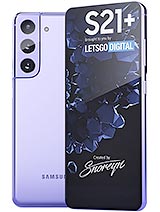
 A couple of leaks and a major announcement shook up our trending chart. The Galaxy S21+ shot up to the top, while the Oppo Reno5 Pro+ slid just below it despite getting more of a teaser than a proper announcement.

The Redmi Note 9 Pro 5G completed the podium as the Poco M3 rapidly lost ground after multiple weeks on top and is now in fourth.

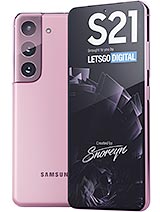
The Samsung rumored pair of Galaxy A52 ang Galaxy S21 follows, while the Apple iPhone 12 Pro Max is all the way down in seventh.

The Redmi Note 9 Pro is eight, ahead of the Galaxy A51 veteran, while the Poco X3 NFC completes the top 10.

Compared to last week's top 10 we lose the Galaxy A21s and Galaxy A71 as well as the Infinix Zero 8i and the Xiaomi Mi 10T Pro.

Samsung Galaxy S21+ 5G
 

Samsung Galaxy S21+ 5G
 
RANK: 1
WAS:

SPECS GALLERY


Oppo Reno5 Pro+ 5G
 

Oppo Reno5 Pro+ 5G
 
RANK: 2
WAS:

SPECS GALLERY


Xiaomi Redmi Note 9 Pro 5G
 

Xiaomi Redmi Note 9 Pro 5G
 
RANK: 3
WAS: 2

SPECS GALLERY


Xiaomi Poco M3
 

Xiaomi Poco M3
 
RANK: 4
WAS: 1

SPECS REVIEW


Samsung Galaxy A52 5G
 

Samsung Galaxy A52 5G
 
RANK: 5
WAS:

SPECS GALLERY


Samsung Galaxy S21 5G
 

Samsung Galaxy S21 5G
 
RANK: 6
WAS:

SPECS GALLERY


Apple iPhone 12 Pro Max
 

Apple iPhone 12 Pro Max
 
RANK: 7
WAS: 3

SPECS REVIEW


Xiaomi Redmi Note 9 Pro
 

Xiaomi Redmi Note 9 Pro
 
RANK: 8
WAS: 5

SPECS REVIEW


Samsung Galaxy A51
 

Samsung Galaxy A51
 
RANK: 9
WAS: 4

SPECS REVIEW


Xiaomi Mi 10T Pro 5G
 

Xiaomi Mi 10T Pro 5G
 
RANK: 10
WAS: 7

SPECS REVIEW


Technology : Google is preparing the next update of the voice assistant for Android


google is preparing the next update of the voice assistant for Android

Journalists resource 9to5Google found out that Google is testing the next update of its voice assistant. In it, an exclusive Google Pixel interface element is now available for all Android smartphones. This became known from the new beta version of the application.

Now, when you activate the Google Assistant, an animated color bar is shown at the bottom while pronouncing a request. Previously, it was an exclusive design element for the voice assistant of Pixel 4, 4a, 4a 5G, and 5. In addition, the voice assistant call window itself has been reduced in half.

In the middle there is a logo with the words “Hi, how can I help you?” (“Hi! How can I help?”). Below are quick actions for supported apps, such as sending mail, checking for new videos, and weather information. In the lower-left corner there is a button with access to the ribbon with quick tips (weather, promotions, reminders), and in the lower right there is a keyboard for text query input. These elements, as we can understand from the screenshots, have not received major changes.

This design decision, taken by Google, can make the use of the application more informative. Thanks to its smaller size, the Google Assistant window itself does not distract while browsing content. When the new version of the product will be released for all users is still unknown.

Technology : iQOO U3 with 90Hz display, Dimensity 800U, and 5,000mAh battery launched in China for 1,498 Yuan (~$229)


iQOO U3 with 90Hz display, Dimensity 800U, and 5,000mAh battery launched in China for 1,498 Yuan (~$229)

Vivo’s sub-brand iQOO has announced a new smartphone called the iQOO U3. The iQOO U3 is a budget-friendly 5G smartphone that features a high refresh rate display, a large-sized battery, and 48-megapixel dual rear cameras.

iQOO U3 specifications and features

The iQOO U3 has 164.15 x 75.35 x 8.4mm dimensions and it weighs 185.5 grams. The device is fitted with a 6.58-inch IPS LCD screen that has a waterdrop notch for an 8-megapixel selfie camera. The screen supports a 20.07:9 aspect ratio, a Full HD+ resolution of 1080 x 2408 pixels, a 401ppi pixel density, HDR10, and a refresh rate of 90Hz. The iQOO U3 offers a screen-to-body ratio of 90.61 percent.

The rear side of the phone features a uniquely designed dual camera setup housed inside a rectangle camera module. It includes a 48-megapixel main shooter with an f/1.79 aperture and a 2-megapixel depth sensor. The phone comes with support for photography features such as night scene mode, panorama, time-lapse photography, EIS, and 4K video recording.

The iQOO UI 1.5 based Android 10 OS comes preinstalled on the iQOO U3. The Dimensity 800U chipset along with up to 8 GB of LPDDR4x RAM fuels the device. It has UFS 2.2 storage of 128 GB and it lacks support for external storage.

The iQOO U3 is backed by a 5000mAh battery that supports 18W dual-engine fast charging. The other features that are available on the device include liquid cooling technology, dual SIM support, Wi-Fi 802.11ac, Bluetooth 5.1, GPS, USB-C, face unlock, a side-facing fingerprint reader, and a 3.5mm audio jack.

iQOO U3 pricing and availability

The iQOO U3 has landed in China in two options such as 6 GB RAM + 128 GB storage and 8 GB RAM + 128 GB storage. It has a starting price of 1,498 Yuan (~$229) and 1,698 Yuan (~$259) and it comes in two colors like Black and Glow Blue. The handset is now up for pre-orders in the home market with a 50 Yuan discount and it is expected to hit the Chinese markets by Dec. 17.

Technology : New video of Samsung Galaxy S21 Plus shows thin bezels around a flat display


Plenty of details about the Samsung Galaxy S21 have already leaked ahead of its expected January release date. But a new video gives a glimpse of the Galaxy S21 Plus model, showing a flat display with thin bezels around it, and a punch hole selfie camera.

The quality of the video from user Random Stuff 2 isn’t the greatest, and it has some sort of distracting music playing under the user’s commentary. It also doesn’t provide a lot of detail about the back of the phone.

Three Galaxy S21 models are expected: a standard, a Plus and an Ultra. A series of leaked teaser trailers, showed off redesigned camera bumps, showing what appears to be five cameras on the S21 Ultra and three each on the S21 and S21 Plus.

Android Police reported last month that the S21 will have a 6.2-inch display, the Plus will be 6.7 inches and the Ultra will have a 6.8-inch display.

 The phones will all have batteries ranging in size from 4,000 mAh to 5,000 mAh, and all three are expected to have either a Snapdragon 875 or Exynos 2100 processor.

The phones are all expected to have 5G, with the S21 and Plus both with Wi-Fi 6 and Bluetooth 5.1, and Wi-Fi 6E in the Ultra. The S21 Ultra is also expected to be compatible with Samsung’s S-Pen, but rumor has it the S-Pen won’t be sold with the device.

Technology : Infinix Hot 10 Play visits FCC – an even cheaper variant with dual rear cameras


 Infinix has a couple of current devices under its “Hot” family line – the vanilla Hot 10 and the Hot 10 Lite. Like its name suggests,

 the latter downgrades specs a bit, through things like a smaller 6.6-inch display, slightly smaller battery, less memory and one fewer main camera module. 

Following in the same trend, an Infinix Hot 10 Play has surfaced on the FCC website – an even cheaper device, with an AI Dual Rear camera setup.

The FCC filing is for an Infinix X688C – an official model number that has been cross-

referenced with other documentation and matched-up wit the Hot 10 Play branding. 

The same device model has also been linked to a particular 10W charger (model number U100XSA). Meaning that it is safe to assume 10W as the top charging speed of the Hot 10 Play.

As for the main FCC document, it clearly shows the AI Dual Camera setup on the back of the phone.

 In turn, the printed FCC label mentions a 2GB/32GB memory configuration – same as the base variant of the Infinix Hot 10 Lite. 

Unfortunately, not much else in terms of specs. That being said, we expect the Play to borrow most of its other bits from the Hot 10 Lite. The camera downgrade alone should be enough to cut a bit of the price off.

There is no official word on the Infinix Hot 10 Play as of yet from the manufacturer. However, a round of certificates typically indicates an imminent launch.

Thursday, December 10, 2020

Technology : Google fined £91m over ad-tracking cookies


Google has been fined 100 million euros (£91m) in France for breaking the country's rules on online advertising trackers known as cookies.

It is the largest fine ever issued by the French data privacy watchdog CNIL.

US retail giant Amazon was also fined 35 million euros for breaking the rules.

CNIL said Google and Amazon's French websites had not sought visitors' consent before advertising cookies were saved on their computers.

Google and Amazon also failed to provide clear information about how the online trackers would be used, and how visitors to the French websites could refuse the cookies, the regulator said.

It has given the tech giants three months to change the information banners displayed on their websites.

If they do not comply, they will be fined a further 100,000 euros per day until the changes are made.

In a statement published by Reuters, Google said: "We stand by our record of providing upfront information and clear controls, strong internal data governance, secure infrastructure, and above all, helpful products.

"Today's decision under French ePrivacy laws overlooks these efforts and doesn't account for the fact that French rules and regulatory guidance are uncertain and constantly evolving."

Amazon said it disagreed with the CNIL decision,

"We continuously update our privacy practices to ensure that we meet the evolving needs and expectations of customers and regulators and fully comply with all applicable laws in every country in which we operate," it said in a statement.

Privacy

In a separate case, Google is being probed by a UK regulator over its plans to change the way the Chrome browser handles cookies.

Google wants to stop advertisers using cookies to track users as they move around the web from one site to another when using Chrome, in a bid to improve privacy.

It plans to introduce an alternative system know as the Privacy Sandbox that will only provide anonymised feedback.

A group of about a dozen small tech companies and publishers has lodged a complaint with the Competition and Markets Authority (CMA) claiming this would damage their businesses.

The CMA is expected to announce whether it will intervene over the coming weeks.

Technology : Facebook Messenger has gone down.


Facebook Messenger has gone down.

Users are unable to send messages and are instead seeing a message indicating that the app is “waiting for network”.

The technical issues arrived at the same time as Instagram was seemingly hit by problems with its own direct messages service, which made it hard to send or receive new chats.

The problems are likely linked, since they now have shared infrastructure that allows messages to be sent between the two platforms. Facebook announced in September that it was not allowing messages to be from Facebook Messenger to Instagram and vice-versa, along with a more significant overhaul of the latter’s DM system.

The outage also comes at a difficult time for Facebook, arriving just hours after it was announced that the company was being hit by lawsuits that threaten to break up it, Instagram and WhatsApp.

The problems particularly affected people in Europe, according to tracking website Down Detector, though that might be a result of where its users are based and online.

Facebook does maintain a “Platform Status” page, for the use of developers and others who rely on it for business. While that site reported a “major outage”, the only issue listed was a problem with Messenger ads, which it said had been ongoing since 2


Tuesday, December 8, 2020

Technology : Here's When Your Samsung Phone Gets Android 11 in 2021


Samsung is the most popular Android smartphone manufacturer, but since its phones run a customized version of the Android OS known as One UI, it takes longer for new versions of the operating system to show up on its devices. Thankfully, we finally know when Android 11 and One UI 3 are coming to Samsung’s stable of smartphones—and it’s soon.

According to a recently posted release schedule, the majority of Samsung’s One UI 3-compatible devices will receive the update and all its new features in early 2021, but its flagship S20 handsets are already seeing the update as of December 7.

Here’s a quick schedule of when you can expect One UI 3 to show up on your device:

December

  • Galaxy S20
  • S20 Plus
  • S20 Ultra

One UI 3 will roll out to Samsung’s Galaxy S20 line throughout December, but the exact date depends on your carrier. T-Mobile started pushing the update on December 7, but we’re still waiting on other carriers.

T-Mobile users in the U.S. (which includes Sprint customers) can check for the update in their S20, S20 Plus, or S20 Ultra’s settings by going to Settings > Software Update > Download & Install. The update may not be ready for all users just yet, but your phone will notify you once it’s time to download.


The rest of Samsung’s smartphones will receive the One UI update throughout January and February—though, again, specific dates will likely differ between carriers.

January

  • Galaxy Note 20
  • Note 20 Ultra
  • Galaxy S20 FE

February

  • Galaxy Fold
  • Galaxy Z Fold 2
  • Galaxy Z Flip
  • Z Flip 5G
  • Galaxy Note 10
  • Note 10 Plus
  • Galaxy S10
  • S10 Plus
  • S10e
  • S10 Lite

Technology : Apple developing in-house mobile modem chips

  Apple Inc. earlier this year launched a project to develop homegrown modem chips for its mobile devices, according to leaked remarks by on...